That first passport stamp feels exciting right up until you realise you are responsible for everything – the documents, the timing, the money, the phone signal, and getting yourself from the airport to the right hotel in the right city. The good news is that most first time international travel tips are not about travelling more bravely. They are about planning a little more clearly.
If you are heading abroad for the first time, the biggest mistakes usually happen before departure. A missed visa requirement, the wrong baggage allowance, a poor flight connection, or no mobile data on arrival can turn a simple trip into an expensive one. Get the basics right, and international travel becomes much easier than many people expect.
First time international travel tips that matter most
A lot of advice for new travellers focuses on packing cubes and airport hacks. Those can help, but the essentials are simpler. You need valid documents, realistic timings, accessible money, working connectivity, and a clear plan for your first few hours after landing.
Start with your passport. Check the expiry date early, not the week before you fly. Many countries require at least six months of validity beyond your arrival date, and some also want blank passport pages. If a visa or travel authorisation is required, apply with plenty of time to spare. Rules vary by nationality and destination, so never assume that because a friend travelled somewhere easily, your own entry process will be identical.
It is also worth checking whether you need proof of onward travel, hotel confirmations, vaccination records, or travel insurance documents. Border officials do not always ask, but if they do, you need them ready. Keep digital copies on your phone and email, and carry printed copies of the most important items in case your battery dies or mobile signal disappears.
Book around real life, not best-case scenarios
Cheap itineraries can look brilliant until you notice they rely on a 55-minute airport connection, a late-night arrival in an unfamiliar city, or a transfer that stops running before you land. First-time travellers often save a little on paper and lose much more in stress.
Give yourself margin. If you are connecting through a large airport, allow enough time for delays, queues, terminal changes, and security checks. If you are landing late, book accommodation that is easy to reach and check the arrival process in advance. Knowing whether you need a taxi, train, bus, airport transfer or local eSIM before you leave can make those first hours far smoother.
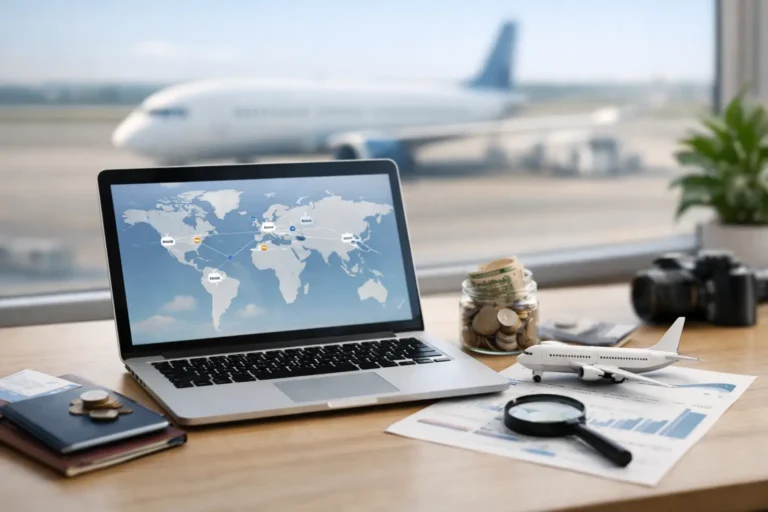
This is one area where comparing several trip elements together helps. Flights, hotel location, airport transport and mobile connectivity are linked. A cheaper hotel on the edge of a city is not always cheaper once you add time, taxi fares and inconvenience.
Build a realistic budget, then add a buffer
The flight is rarely the full cost of an international trip. First-time travellers often budget for airfare and accommodation but underestimate airport transport, baggage fees, local travel, card charges, roaming, attraction entry, and everyday spending.
Before you book, work out the likely total trip cost. Include meals, public transport, airport transfers, travel insurance, and a small emergency fund. If you are visiting a destination with a very different cost of living, check current prices for ordinary things such as coffee, supermarket snacks, taxis and SIM data packages. That gives you a more useful picture than headline claims about a place being cheap or expensive.
A buffer matters because small disruptions add up. A delayed arrival might mean an unplanned taxi. A strict airline might charge for hand luggage that exceeds its limit. A missed train may require a last-minute alternative. If your budget has no room to move, minor problems feel much bigger.
Use more than one payment method
Relying on one bank card is risky. Cards get blocked, ATMs fail, payment systems go down, and some places still prefer cash. Carry at least two payment methods, ideally kept separately, plus a modest amount of local currency or widely accepted backup cash for your first day.
Before you travel, tell your bank if required and check foreign transaction fees. Some cards are excellent for overseas spending, while others add charges that quietly increase every purchase. Also check your daily withdrawal limit. It is frustrating to arrive, find an ATM, and discover your own bank settings are the problem.
Keep an eye on how your destination works in practice. In some cities, card payments are standard almost everywhere. In others, small cafés, markets or local transport may still be cash-heavy. The right mix depends on where you are going.
Pack for movement, not for every possibility
Overpacking is one of the most common beginner mistakes. It slows you down, increases the chance of baggage fees, and makes airport transfers, trains and hotel check-ins more awkward than they need to be.
Pack around your itinerary. If you will move between cities, climb stairs, use public transport or walk from stations, a manageable bag is worth more than extra outfit options. Check baggage rules carefully, especially on budget airlines, because size and weight limits can be much stricter than expected.
Keep essentials in your cabin bag: passport, medication, chargers, one change of clothes, valuables, and anything you cannot easily replace in the first 24 hours. Lost luggage does not happen on every trip, but first-time travellers are often surprised by how inconvenient even a short delay can be.
What to keep easy to reach
You do not need a complicated airport system, but you do need one that works under pressure. Keep your passport, boarding pass, travel authorisations, payment card, accommodation address and arrival transport details in one easily accessible place. Fumbling through a stuffed backpack at immigration is not ideal.
Sort your phone before you leave
A phone is now part map, part wallet, part boarding pass, part emergency contact list. If it stops being useful on arrival, everything feels harder.
Check your roaming costs before you travel. In many cases, buying an eSIM or local data plan is better value than using your standard mobile provider abroad. Download offline maps, airline apps, hotel details, translation tools and any tickets you may need in advance. Screenshot key addresses and confirmation numbers too. Apps are useful, but only if they open when you need them.
Charging is another small detail that matters. Bring the correct plug adaptor for your destination and, if you will be in transit for long periods, a power bank. This is especially helpful if you are relying on digital boarding passes or mobile check-in.
Respect local rules and everyday customs
International travel is easier when you do not assume that everything works like it does at home. Local transport etiquette, tipping expectations, dress norms, queueing habits, and opening hours can differ more than first-time travellers expect.
You do not need to memorise an entire culture guide, but it helps to learn the basics before you go. Check whether restaurants add service charges, whether public transport needs exact change or app booking, and whether popular attractions require timed entry. In some destinations, shops close earlier than expected or open later on Sundays. In others, airport taxis have fixed ranks and prices, while unofficial drivers should be avoided.
A little preparation reduces friction and helps you move through a place more confidently.
Keep your arrival simple
One of the best first time international travel tips is to make day one as easy as possible. Do not plan a packed itinerary for the evening you land. Aim to arrive with a clear route to your accommodation, enough money or card access for immediate costs, and a working phone.
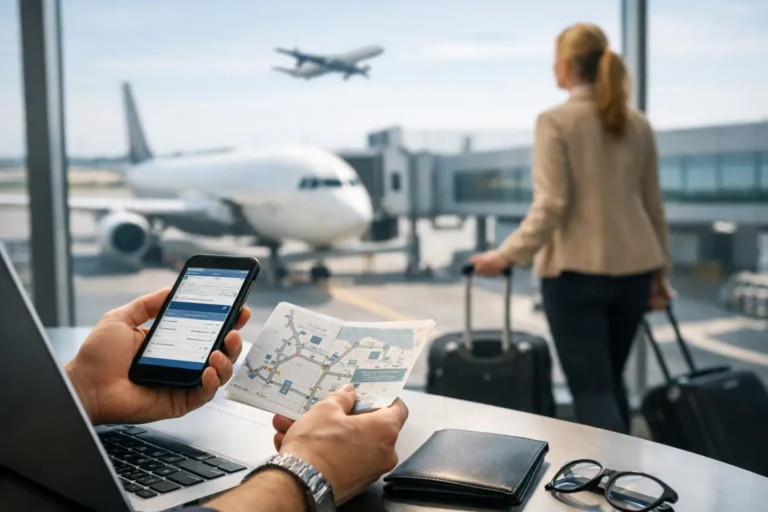
If your flight arrives very early, check whether your hotel can store luggage. If it arrives late, confirm reception hours. If you are using public transport from the airport, look up the route in advance rather than relying on airport Wi-Fi and guesswork. Tired travellers make poorer decisions, and first arrivals are often when unnecessary stress creeps in.
Safety without paranoia
You do not need to treat every destination as dangerous, but you should stay alert in the way you would in any busy unfamiliar place. Watch your bags in transport hubs, avoid displaying valuables, and be cautious with public Wi-Fi for banking or sensitive logins. Save local emergency numbers and the address of your accommodation before you leave the airport.
Leave room for delays and changes
Even well-planned trips shift. Weather changes, trains run late, museums sell out, and energy levels dip. The aim is not a flawless itinerary. It is a trip that still works when one part goes off schedule.
That means avoiding overbooking your days, especially at the start. If you have only a short break, it is tempting to pack in everything. Usually, a little breathing room makes the whole trip better. You notice more, spend less time rushing, and have flexibility if plans change.
For many travellers, the smartest approach is to secure the essentials first – flights, accommodation, airport transfer, key activities, and connectivity – then leave some time open. That gives you structure without making the trip feel rigid.
Confidence comes from preparation
Your first trip abroad does not require expert-level travel skills. It requires a few sensible systems and a realistic view of what can go wrong. Documents, money, phone access, transport and timing matter more than any clever packing trick.
Once those are covered, the trip starts to feel lighter. You stop worrying about whether you have missed something major and start paying attention to the reason you booked it in the first place. Plan the practical parts well, and the enjoyable parts have space to happen.